Time for Federal, State Government to Budget Responsibly

If you listened to Governor Josh Shapiro’s budget address earlier this month, you heard a lot about so-called investments, growth, and opportunity. What was missing from the Governor’s address? Fiscal restraint. As the topic of affordability remains on the minds of thousands of Pennsylvania families, there’s an important conversation Pennsylvania and Washington both desperately need right now: how do we promote better budgeting before taxpayers are asked to foot an even bigger bill?
In Harrisburg, the Governor rolled out a budget proposal that would increase overall state spending yet again. The Governor brought up important topics: education, infrastructure, public safety. The question isn’t whether those things matter—instead, the question remains whether we are spending within our means and building a budget that can withstand economic uncertainty without turning to tax hikes or draining reserves.
Pennsylvanians have to balance their own budgets. Families can’t spend more than they earn year after year, and small businesses can’t rely on a one-time windfall to cover costs. However, in Harrisburg, our state government seems to get a pass. When revenues come in strong, government grows. Alternatively, when revenues slow down, the pressure builds for higher taxes.
Fortunately, there’s a solution. Proposals like the Responsible Budgeting Act introduced in the Pennsylvania House are critical to ensuring that we get our fiscal house in order. The concept is simple: tie spending growth to economic growth, require structural balance, strengthen the state’s rainy day fund, and build in mechanisms that prevent chronic deficits before they start. Put simply, this legislation puts guardrails on government so spending doesn’t outpace the taxpayers who fund it.
It’s common sense: a rules-based budget forces lawmakers to prioritize and make tradeoffs. It protects taxpayers from instability that leads to painful cuts or sudden tax increases down the road. If we want Pennsylvania to be competitive, to attract businesses and families, and to provide long-term stability, we need predictability in our fiscal policy. That starts with discipline from Harrisburg.
Our commonwealth’s Capitol isn’t alone in needing reform.
The federal government is running annual deficits measured in the trillions. The national debt continues to climb, and one of the biggest reasons is that Congress doesn’t budget in a comprehensive way. Roughly three-quarters of federal spending runs on autopilot under so-called “mandatory” programs. Lawmakers only vote annually on a fraction of total expenditures, and even that process routinely breaks down into continuing resolutions and last-minute omnibus packages. This process is certainly not sustainable.
That’s why legislation like H.R. 7295, the Comprehensive Congressional Budget Act of 2026, deserves to be made into law. The goal of this bill is to modernize and streamline the federal budget process, so Congress considers the full fiscal picture—both spending and revenue—in a coordinated, comprehensive framework. Instead of treating most federal spending as untouchable and arguing over the margins, lawmakers would be forced to confront the entire budget.
Instead of governing crisis to crisis, Congress would have clearer timelines, stronger incentives to complete its work on time, and a more holistic approach to fiscal planning. It would make it harder to hide spending in the shadows and easier for the American people to see exactly where their money is going.
Better budgeting isn’t just about numbers on a spreadsheet. When voters see endless deficits in Washington and constant spending growth in Harrisburg, they lose confidence that anyone is minding the store. That erosion of trust has consequences for our economy, our markets, and our civic life.
Governor Shapiro’s budget address gives Pennsylvania an opportunity. Lawmakers can either continue a pattern of steady spending growth that assumes the good times will roll on forever, or they can adopt structural reforms that protect taxpayers and stabilize the commonwealth for the long haul.
At the federal level, Congress faces a similar choice. They can continue to patchwork budgeting that fuels debt and uncertainty, or modernize the process and bring discipline back to Washington.
If Harrisburg and Washington both embraced rules-based budgeting, transparency, and real accountability, it would send a message that government works for the people who fund it—not the other way around.
Demand more from your lawmakers in Washington and Harrisburg. Head to AFPPennsylvania.com to learn more. Our commonwealth’s fiscal outlook depends on it.
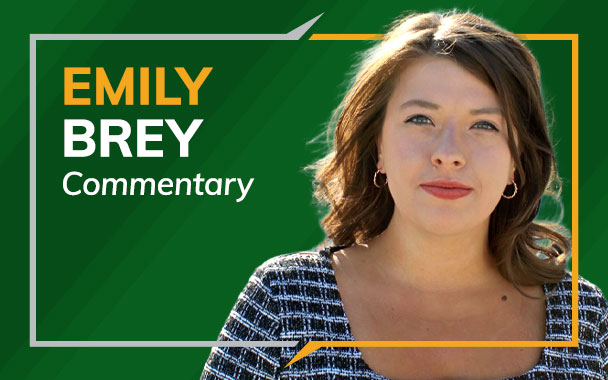
This is Emily Brey, State Director with Americans for Prosperity-PA.