Tough Love: No Bail-Out for Socialism-Embracing Cities

Mayor Mandani’s calling out a property owner in New York City; Attorney General James of New York attacking President Trump in a decision that was overturned in 2025; or Elon Musk’s Delaware pay package ruling subsequently overruled by shareholders, all have the same thing in common: attack capital and do not be shocked by the flight of capital from your communities or states.
New York City, Seattle, Los Angeles are just a few of the cities experimenting with the Democrat Socialist of America agenda, a modified form of communism. The consequences of their actions have not yet begun to be felt but when they are the outcomes will be catastrophic.
These trends will lead our nation to a decision point – bail out or no bail out. The decision will have to be made and the timing will be the next major recession. The decision made will determine if the failings of socialism/communism are learned in the United States or are the horrible decisions of another locality paid for by others.
In the past, our nation has taken a “bail-out” approach almost always preventing the needed lessons from being learned. Instead, others have been called upon to pay the price for another’s decisions. No lessons learned and the behavior gets replicated as we as seeing playing out today.
Years ago, while serving in the Marine Corps, I spent considerable time in Haiti. It taught me an economic lesson I have never forgotten. Following the 1991 military coup, the United States and international community imposed economic sanctions on Haiti. Those actions may have been justified.
But justified decisions still have consequences. I watched businesses leave. The economic statistics eventually documented the devastation. Between 1991 and 1994, Haiti’s real GDP declined by roughly 30 percent. Investment collapsed from approximately 11 percent of GDP to about 2 percent. Export-oriented assembly industries, which had been enormously important to the country’s exports, virtually ceased operating.
But statistics do not fully describe what I saw. Businesses that left did not come back. Capital found another home. Customers found other suppliers. Managers relocated while Haitian workers were left without jobs. Supply chains were rebuilt excluding Haiti and investors learned to consider other opportunities.
We are seeing the same issues play out in New York City, Los Angeles and other similar cities. The outcomes will not be good!
But Haiti taught me something that applies far beyond Hait and that is that economic activity can disappear much faster than it can be recreated.
That lesson may be worth remembering as Americans make increasingly consequential economic choices today which have unsustainable economic consequences and costs.
Who ultimately bears the cost is now a decision we must all make. We are at a crossroads.
Consider a contemporary experiment underway in New York City. Beginning with the 2026–27 property-tax year, New York City imposed a new annual surcharge on certain high-value residential properties that are not used as primary residences.
What happens next is the issue. People have choices. Some owners may sell. Some potential purchasers may decide not to buy. Some may rent instead. Some may spend less time or money in New York. And some future investor may simply conclude that another city offers a more attractive opportunity.
We do not yet know for certain. That uncertainty is precisely the point. Government can determine the tax rate. Government cannot determine how people will respond to it.
Capital flight often produces an image of a factory closing and moving to other states or localities. But some of the most important economic movements are invisible.
A factory does not close. The next factory simply gets built somewhere else.
A company does not relocate its headquarters. Its next expansion occurs in another state.
An entrepreneur does not shut down a business. She decides not to start it there in the first place.
A wealthy family does not announce its departure. The next generation simply establishes residency somewhere else.
Nothing appears in the accounting records because the economic activity never existed.
Yet the community is poorer because of it. We must also consider the economic activity that changes because the policy exists. States and cities should be allowed to experiment but what happens when those experiments go wrong.
New York should be able to make different choices from Texas. California should be able to make different choices from Florida. Pennsylvania should be able to learn from all of them. That is one of the strengths of our Nation.
But experiments require consequences. What if those experiments go wrong.
Who should bear the cost? Sometimes we should help one another but when is helping not a good idea. There are legitimate reasons for federal intervention. But misfortune and consequence are not always the same thing.
If a jurisdiction knowingly makes economic choices, receives the benefits of those choices, and then asks citizens elsewhere to absorb the costs when those choices fail, something important has changed. The benefits remained local. The consequences became national.
That creates a moral hazard. When people are insulated from the consequences of risk, their willingness to assume risk can change. We understand the principle when discussing banks. Why would it disappear when discussing governments?
This is where the phrase “tough love” matters. Tough love is not abandoning people who need help. It is recognizing that helping someone and insulating someone from every consequence of a decision are not necessarily the same thing. When the people making a decision can transfer its ultimate cost to people who had no voice in making it, accountability weakens.
That should concern both conservatives and progressives. Because without accountability, we lose one of the most valuable features of federalism: the ability to discover what works.
Responsible capitalism requires intellectual honesty. We cannot demand that experiments be allowed only when we expect to agree with their results. But neither should we erase the results when an experiment fails. That is the balance.
Freedom to choose. Responsibility for consequences. Compassion when genuine misfortune occurs. Accountability when choices produce foreseeable costs.
The lines between those principles will never be perfectly clear. Federal assistance is not free money. It ultimately comes from taxation, borrowing, inflationary pressures under some circumstances, or resources that cannot be used somewhere else.
A federal bailout does not eliminate a cost. It redistributes it. That should force us to ask more than whether the people receiving assistance would benefit. We should also ask about the people being required to provide it.
Our economic system depends upon freedom. But freedom separated from responsibility eventually becomes something else. If profits remain private while losses become public, we distort capitalism. If communities retain the benefits of their decisions while transferring the losses nationally, we distort federalism. If citizens are protected indefinitely from the reasonably foreseeable consequences of their choices, we weaken accountability.
None of this means America should stop helping Americans. It means assistance should be designed carefully enough that compassion does not destroy the feedback mechanism that helps free societies learn.
Haiti taught me long ago that economic consequences can outlive the policy that produced them. The lessons soon to be learned in New York City, Los Angeles, and Seattle should not be list either. The next recession is the deciding point in which we must decide if the socialist/communist experiment fails or gets bailed out. If we choose the later, we all will suffer.
We will have privatized the freedom to choose while socializing the consequences of the choice. That is not tough love. And it is not responsible governing either.
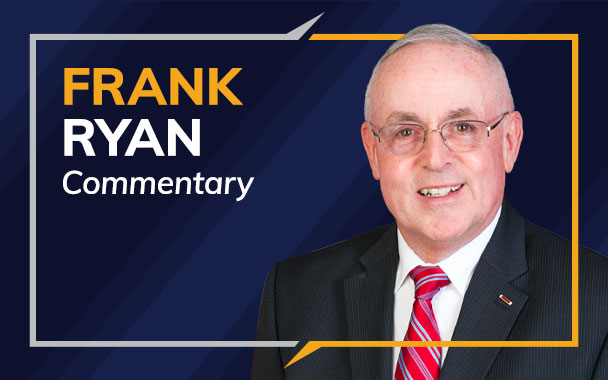
Frank Ryan is a CPA, retired U.S. Marine Corps Reserve Colonel, former member of the Pennsylvania House of Representatives, and former Vice Chair of the Pennsylvania Public School Employees’ Retirement System (PSERS).