Mr. Shapiro’s Neighborhood

During a recent visit to Latrobe, hometown of the late Fred Rogers I got to reminiscing about his iconic television program Mr. Roger’s Neighborhood and how the Presbyterian minister was a soothing presence for generations of pre-school children.
His neighborhood was a welcoming place, reflective of the strong sense of community that characterizes southwestern Pennsylvania. Across the state, however, there is a neighborhood that is not so welcoming.
Governor Josh Shapiro has become embroiled in an unseemly dispute with his next-door neighbors. The disagreement has boiled over into competing lawsuits with the state’s chief executive suing his neighbors, and they in turn suing him.
It all started with last spring’s firebombing of the Governor’s Residence in Harrisburg by an antisemitic nut case seeking to do harm to the governor and his family. Mercifully, the governor and his family escaped unharmed, but the residence was heavily damaged. That prompted a security review and the implementation of significant security upgrades to the governor’s official residence.
Governor Shapiro’s private residence is in Montgomery County near Philadelphia. Taxpayer dollars have also financed over $1 million in security upgrades to his home. The expenditure of public dollars on an elected official’s private residence is being questioned by state Senate Republicans who are also concerned over the lack of transparency over spending at both properties.
The governor, as he typically does, reacted angrily to having his actions questioned. Senators, however, are doing their jobs by asking for an accounting of spending on these projects. Further, the investment of over $1 million in a private residence when the state provides secure housing is a legitimate policy question. When Shapiro leaves office the structural and landscaping improvements will remain adding to the value of his personal residence.
Those landscaping improvements are what have resulted in the dispute with the Shapiro neighbors. There is disagreement over ownership of a strip of land bordering the two properties. The governor’s neighbors claim they have been denied access to that property by state police while the issue is being litigated.
As the governor fights to take his neighbor’s property in Harrisburg he is fighting to take more of yours. He has proposed a 2026-27 state budget that, if it wins legislative approval, will spend over $6 billion – that is billion with a ‘B’ – more than the commonwealth expects to receive in revenue.
Such was the case in the current fiscal year with the spending deficit papered over using budgetary gimmicks and rummaging through the couch cushions to find unexpended funds to close the gap. But those techniques have now been exhausted.
So, the governor is eyeing the state’s “Rainy Day” fund. That fund of fiscal reserves was established for the express purpose of insulating the state budget from sudden, unexpected fiscal impacts. The willful overspending of state revenues does not fit that criteria.
The governor is proposing essentially to drain the Rainy Day fund to cover the next fiscal year’s budget deficit. The problem is, once those dollars are depleted the unrealistically high spending levels will remain in place – absent the revenue to support them.
Worse, Shapiro’s revenue projections depend on funding sources that do not currently exist. He includes income from taxes on legalized recreational marijuana and taxes on skill games. Recreational marijuana is not currently legal in Pennsylvania, nor does it appear likely to be legalized in the near future. Lawmakers have been unable to come to agreement on the taxing of skill games. Even if a tax is levied its collection is not likely to materialize in the coming fiscal year.
With the Rainy Day fund drained and higher spending levels remaining in place residents in neighborhoods all across Penn’s Woods are facing a massive tax hike. The Commonwealth Foundation estimates state taxes will need to be increased by an average of $1,900 per family of four to fund Governor Shapiro’s spending going forward.
This, however, is not a concern for the governor. He is seeking re-election this year and has his eye on a bid for the 2028 Democratic Presidential nomination. He is more concerned with dishing out taxpayer dollars to key constituent groups that about a potential working family tax hike – which would land after those elections.
Fortunately, Pennsylvania has a divided state legislature. Republicans control the state Senate and have forcefully stated they will not go along with the governor’s budget proposal. Your ability to continue to afford living in your neighborhood depends on the success of their efforts.
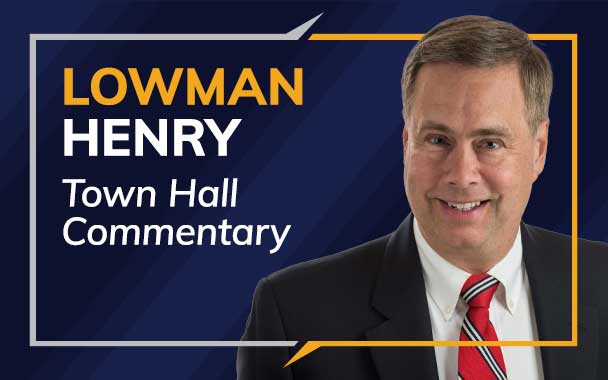
(Lowman S. Henry is Chairman & CEO of the Lincoln Institute and host of the weekly American Radio Journal and Lincoln Radio Journal. His e-mail address is lhenry@lincolninstitute.org.)
Permission to reprint is granted provided author and affiliation are cited.