Bad Business Climate Causing Businesses to Look Elsewhere

The Lincoln Institute’s Fall 2025 Keystone Business Climate Survey produced an attention-getting result: over the past six months 43% of businesses in Pennsylvania have considered moving all or part of their business out of the state. Twenty-four percent considered moving all their business operations out of Pennsylvania, another 18% considered moving some of their operations.
Given many businesses cannot physically relocate, that number reveals a substantial undercurrent of discontent among those who own or manage a business. Additionally, the statistic does not capture the opportunity cost of those businesses that rejected locating or expanding in Pennsylvania because of our business climate.
Since the end of the COVID epidemic in 2021 the survey, which is conducted every six months, has consistently found more businesses saying Pennsylvania’s business climate has gotten worse rather than better. Biden-era inflation was a key factor, but now with inflation having returned to “normal” levels the pessimism persists.
A new report by the Tax Foundation sheds some light on the factors driving this dour assessment. In its 2025 State Tax Competitiveness Index the foundation ranked Pennsylvania 36th overall – trailing even West Virginia which has recently taken steps to improve its tax climate.
Specifically, the report noted:
“Pennsylvania maintains an uncompetitive “convenience of the employer rule,” which can lead to double taxation for remote employees working for businesses located in the Commonwealth—ultimately a disincentive for businesses to locate in the state if they want to be able to hire across the country. Pennsylvania also requires individual income tax filing and withholding for nonresidents working even a single day in the state.”
At 4.99% Pennsylvania’s corporate income tax rate is also high relative to most other states. The rate is slowly phasing down. During his campaign four years ago Governor Josh Shapiro promised to speed up the rate of the phase down – it is a promise he has not kept.
Making matters worse the Tax Foundation highlights the fact that Pennsylvania is: “among the very few states to significantly cap net operating loss carryforwards, limiting them to 40 percent of taxable income, but recently enacted legislation will phase this cap up to 80 percent, in 10 percentage point increments, from 2025 through 2029. The Commonwealth does not conform . . . permanent full expensing offered at the federal level.”
Local tax policies and regulations add to the burden facing businesses:
“Pennsylvania also allows localities with existing gross receipts taxes to retain them, though new local gross receipts taxes cannot be created . . . Local governments operate under a patchwork of different state-imposed tax rules . . . Consequently, Pennsylvania’s local taxes are among the more complex and burdensome in the country.”
Breaking the study down by category, while ranking 36th overall, Pennsylvania ranked 38th for its individual tax rate, 24th for the business tax rate and 24th for the sales tax rate. The commonwealth posted its best performance for property taxes, ranking 13th among the 50 states.
One of the top concerns of the owners, CEOs and managers who participated in the Fall 2025 Keystone Business Climate Survey was future economic conditions. While national and international economic uncertainties contribute to that concern, the fiscal instability of state government is also a factor.
The survey was taken as the commonwealth was over three months into the recently resolved state budget stalemate. Going into the budget season the state already faced a structural deficit between spending and anticipated revenue that by some estimates exceeded $3 billion dollars per year. Governor Shapiro added to the problem by proposing a budget spending an additional $5 billion over projected revenue. He got close to that spend number in the final budget agreement further adding to the structural imbalance.
Business hates nothing more than uncertainty. The lack of a state budget coupled with the partial shutdown of the federal government created an unstable business climate. Pennsylvania’s relatively high taxes coupled with a slow and complicated regulatory bureaucracy make it difficult for businesses to succeed.
Removing Pennsylvania from the job crushing Regional Greenhouse Gas Initiative (RGGI) and movement toward regulatory reform in the state budget deal offer a glimmer of hope. However, the commonwealth will need additional regulatory reform, coupled with tax and spending constraint or it will continue to lose population and businesses to sunbelt states.
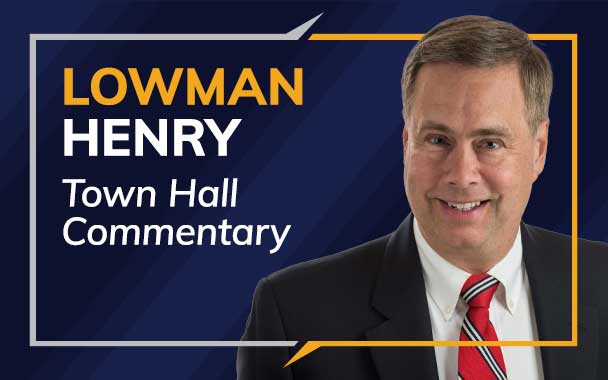
(Lowman S. Henry is Chairman & CEO of the Lincoln Institute and host of the weekly American Radio Journal and Lincoln Radio Journal. His e-mail address is lhenry@lincolninstitute.org.)
Permission to reprint is granted provided author and affiliation are cited.